Commercial Water Damage in San Ramon, CA
Across Bishop Ranch and nearby retail, every day of downtime costs a tenant money. The commercial drying team plans extraction and drying in phases so unaffected areas keep working.
(888) 774-9605Speak with 24/7 San Ramon dispatch- IICRC S500 drying
- Daily moisture readings
- Truck-mounted extraction
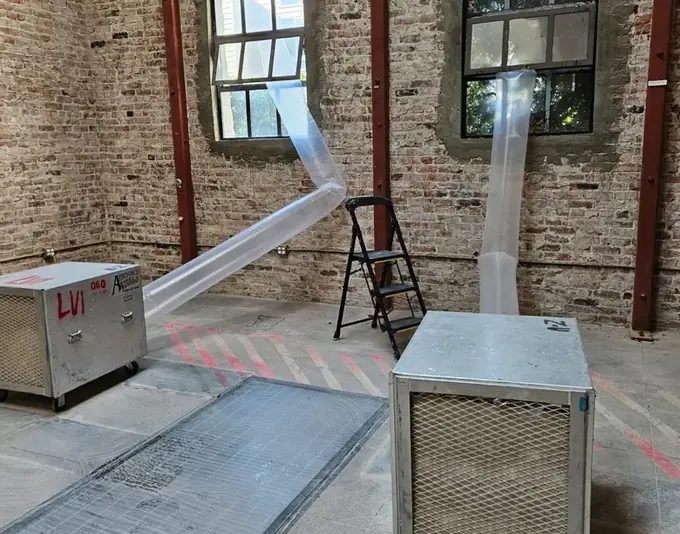
First steps for commercial water damage in San Ramon
- 1
Cut the water
Close the valve that serves the affected area, or the main for the whole building, before anything else.
- 2
Keep people safe
Rope off slick floors and send staff and customers to dry areas of the building.
- 3
Rescue what matters
Move laptops, paper files and inventory off damp floors and onto shelving or tables.
- 4
Brief the dispatcher
Describe how large the space is and which hours it must stay open, so the plan can be phased.
How commercial water damage is handled in San Ramon
What separates a finished dry-out from a cosmetic one is the order of the work and the readings behind it.
Dispatch day and night
Dispatch runs around the clock in San Ramon, so a leak found after closing can be handled before the doors open.
Phased drying
Under IICRC S500 the crew can dry a space in sections, so areas that read dry reopen first.
Paperwork per party
Owners, tenants and each insurer receive maps, photos and daily logs for their own suite.
A big commercial base
Bishop Ranch offices, City Center Bishop Ranch retail and many multifamily communities create heavy multi-tenant water risk.
What does commercial water damage cost in San Ramon, CA?
Commercial water damage restoration in San Ramon, CA generally costs $3,000 to $25,000 or more. The size of the space, the water category, how much ceiling and wall must come out and whether drying must be scheduled around opening hours set the total.
The drivers are the water category, the square footage that got wet, the material class and how fast drying started. Try the water damage cost calculator for a planning range, then call for a firm number.
One suite
$3,000 to $7,500- Water extracted
- Wet ceiling tile and drywall out
- Drying equipment placed
Several suites
$7,500 to $15,000- Staged, phased drying
- Barriers where needed
- Daily logs for each party
Large or Category 3
$15,000 to $25,000+- Broad removal
- HEPA air scrubbing
- Long monitoring window
How commercial water damage moves from wet to dry
- 1
Map each suite
Meters and thermal imaging cover every affected suite, the ceilings above and the walls it shares with neighbors, before any material is removed.
- 2
Extract and strip
Water is pulled out and wet ceiling tile and drywall come down, with walkways kept open where people are still working.
- 3
Stage the drying
Equipment goes in around opening hours, and sections that read dry are handed back first so the business keeps running.
- 4
Report to each party
Daily readings and logs go to the owner, the tenant and every insurer involved, each for their own suite.
Bishop Ranch is a master-planned office park in central San Ramon, and City Center Bishop Ranch adds about 300,000 square feet of retail, dining and entertainment. Multifamily communities across the city add still more shared buildings. That mix means a single leak can touch several tenants and several insurers, whether it begins in a restroom, a roof drain, a rooftop air conditioner, a water heater, storm runoff or the suite upstairs.
How commercial leaks start
- A restroom supply or drain that fails in a building with many tenants
- Roof drains and flat roofs that overflow when winter storms hit
- A rooftop air conditioning unit or its condensate drain
- A break room appliance or a water heater closet
- An upstairs tenant whose plumbing leaks into the suite below
Offices and shops usually carry carpet tile over a hard floor. Tiles can often be lifted and dried in sections, which beats replacing the whole floor and keeps a suite usable sooner. Ceiling tile that stayed dry can usually be saved too, while wet tile is replaced.
How a commercial loss is run
- Moisture mapping of each affected suite, its ceilings and the walls it shares
- Extraction first, then removal of wet ceiling tile and drywall
- Drying staged around opening hours, with walkways kept open
- Containment and HEPA air scrubbers when the water is Category 2 or 3
- Daily readings and logs delivered to the owner, the tenant and the insurers
Business plans trade speed against access. Working a space in sections lets the areas that read dry reopen first while the rest finishes. The drying method is explained under structural drying, and sewage losses fall under sewage backup cleanup.
Water in a San Ramon office, store or lobby? Shut the supply and call before opening.
Call (888) 774-9605 about commercial water damage in San RamonOwners, tenants and paperwork
In a leased space the owner and the tenant often hold different policies, one for the building and one for improvements and stock. A clear moisture map with photos and logs for each suite sorts out who is responsible for what. Your own policy decides what is covered, so ask the insurer, and keep each party's receipts in a separate folder. Property managers should also record when each tenant was notified, because that timeline often matters to the claim.
Covering every corner of San Ramon, CA
The restoration team covers all of San Ramon, CA with a fast local response, from Dougherty Valley and Gale Ranch to Twin Creeks, Canyon Lakes and Bishop Ranch.
See every area servedCommercial Water Damage questions in San Ramon, CA
Can the doors stay open during drying?
Often in part. The crew can phase the work and position equipment to keep walkways and unaffected areas usable while the rest of the space dries, and the plan is set before the equipment goes in.
Is carpet tile easier to rescue than broadloom?
Frequently. Tiles lift in sections so the floor below can dry, and they can be reset afterward if the water was clean.
What if another tenant caused the leak?
That depends on the leases and each party's policy. Separate paperwork for every suite lets each insurer see its own share, so ask yours before work begins.
How long will a commercial dry-out take?
A contained clean-water loss often dries within three to five days, while large spaces, Category 3 water and dense materials take longer.
Will the equipment disturb staff?
Air movers and dehumidifiers make noise, so the crew places them to limit disruption where people are working, and noisy phases can run after hours.
What does an insurer ask to see?
A moisture map, daily drying logs, photos taken before any removal and an itemized scope of the work, plus the equipment days that were needed.
Water in a San Ramon business? Get drying started.
Every closed day costs a tenant revenue while water keeps spreading. The San Ramon pros dispatch day and night.