Structural Drying & Dehumidification in San Ramon, CA
Moisture trapped in framing and subfloor is what swells and smells later. In San Ramon homes built mostly after 1980, the drying team works to a measured target and never stops at the surface.
(888) 774-9605Speak with 24/7 San Ramon dispatch- IICRC S500 drying
- Daily moisture readings
- Truck-mounted extraction
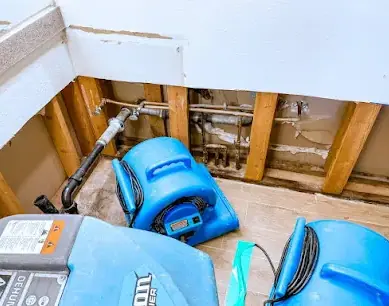
First steps for structural drying in San Ramon
- 1
Confirm no new water
Check that the source has been stopped and nothing is still feeding the wet area.
- 2
Clear the floors
Take furniture and rugs off wet flooring and out from damp walls so air can reach every surface.
- 3
Hold the finishes
Wait on paint, new flooring and baseboard until the readings say the structure is dry.
- 4
Request a moisture map
Phone for a moisture map so the drying plan follows the actual wet zones.
How structural drying is handled in San Ramon
What separates a finished dry-out from a cosmetic one is the order of the work and the readings behind it.
Dispatch day and night
Dispatch runs around the clock in San Ramon, so equipment can be set while materials are still recoverable.
Readings, not appearances
Under IICRC S500 the crew pulls equipment only when meters match a dry reference sample from the same home.
Logs an adjuster can read
Daily humidity and moisture entries show that each day the equipment ran was needed.
Local materials
With most homes built after 1980, drywall, engineered flooring and carpet over pad are the usual materials.
What does structural drying cost in San Ramon, CA?
Structural drying and dehumidification in San Ramon, CA generally costs $1,000 to $6,500 or more. Room count, class of loss, building materials and the days the equipment must run all shape the total.
The drivers are the water category, the square footage that got wet, the material class and how fast drying started. Try the water damage cost calculator for a planning range, then call for a firm number.
Light loss, one area
$1,000 to $2,500- Air movers and one dehumidifier
- Moisture map
- Daily logs
Several rooms
$2,500 to $4,500- Wall cavities vented
- More equipment
- Daily humidity readings
Dense materials
$4,500 to $6,500+- Hardwood, plaster or concrete
- Desiccant dehumidifiers
- Long monitoring
How structural drying moves from wet to dry
- 1
Measure the structure
Pin and pinless meters, humidity readings and thermal images show exactly which materials hold water and how much.
- 2
Remove what cannot recover
Material that is ruined beyond drying is cut out so everything else can release its moisture.
- 3
Place equipment by load
Air movers and LGR dehumidifiers are set to each room's evaporation load, with desiccants added for dense materials.
- 4
Log until the goal is met
Daily readings are recorded until materials sit within 2 to 4 points of the dry reference sample.
Drying the structure is the longest stage of a water loss and the one most often cut short. A mop and a few fans can leave a room feeling dry while the foot of the drywall, the framing and the subfloor still hold water. The drying team measures rather than guesses, and keeps going until the numbers say the water is gone.
What the meters and cameras show
- Moisture content in drywall, framing and subfloor, read with pin and pinless meters
- Room temperature and relative humidity, expressed as grains of moisture per pound of air
- A dry sample reading from a part of the house the water never touched
- Thermal images that expose cool, wet patches hidden behind surfaces
Class 1 through 4 describes how much equipment a room needs. Class 1 is a small wet area in low-porosity material. Class 4 involves dense material like hardwood, plaster or concrete that clings to water, which is when desiccant dehumidifiers earn their place. Most San Ramon homes were built after 1980, so drywall and engineered flooring dominate, while older streets in Twin Creeks and the Crow Canyon area can bring denser finishes that take more time.
How the structure gets dry
- Material that cannot recover is cut out so the rest can release water
- Air movers are aimed along walls and across floors to match each room's load
- LGR dehumidifiers pull moisture from the air, with desiccant units for Class 4 materials
- Baseboards come off and small vent holes open into wall cavities when needed
- Logs continue each day until materials land within 2 to 4 points of the reference
Season matters. Dry summers speed things up and cool, damp winters slow them down, so a January job asks more of the dehumidifiers than an August one. That is why equipment leaves on readings, never on a date. A rough planning range comes from the drying-time estimator, and water extraction happens first whenever standing water is present.
Surface looks dry yet the air feels clammy? Have the walls and subfloor measured.
Call (888) 774-9605 about structural drying in San RamonWhat the drying logs protect
Each day's humidity and moisture entries show an adjuster that the job met the standard and that each equipment day was necessary. They also protect the house, because rebuilding should not begin until the structure reads dry. Closing up walls over damp framing is how one leak becomes two repairs, and it is the main reason owners ask to see the numbers before the carpenters arrive.
Covering every corner of San Ramon, CA
The restoration team covers all of San Ramon, CA with a fast local response, from Dougherty Valley and Gale Ranch to Twin Creeks, Canyon Lakes and Bishop Ranch.
See every area servedStructural Drying and Dehumidification questions in San Ramon, CA
What does dry to standard mean?
Meter readings on wet materials land within 2 to 4 points of an unaffected sample in the same building, which is the IICRC S500 yardstick, and the logs prove it was reached.
Why can't ordinary fans do the job?
Fans merely push air around. With no dehumidifier, moisture lifts out of the walls, hangs in the room and settles back into other materials.
How long should I expect drying to run?
A contained Class 1 loss often takes three to five days. Hardwood, concrete and layered ceilings take longer, and so does a cool winter week, because cold air holds less moisture.
Is it okay to turn the machines off overnight?
Leaving them on is better. Switching them off lets humidity creep back up and stretches the schedule, and the noise is a small price for fewer drying days.
Why would a crew drill into my walls?
Tiny openings behind the baseboard give dry air a path into the cavity, letting framing dry while the drywall stays up.
What makes an LGR dehumidifier different?
A low grain refrigerant unit keeps pulling water from the air even when the air is already fairly dry, which standard units cannot do as well.
Water damage in San Ramon? Get the drying measured.
Hidden moisture in framing keeps causing damage after the surface looks fine. The San Ramon pros dispatch around the clock.