Structural Drying in Pleasanton, CA
Moisture trapped in framing, subfloor and walls causes swelling and odor later. After extraction, the drying team dries the structure to a measured goal and records every reading.
(888) 774-9605Speak with 24/7 Pleasanton dispatch- IICRC S500 drying
- Daily moisture readings
- Truck-mounted extraction
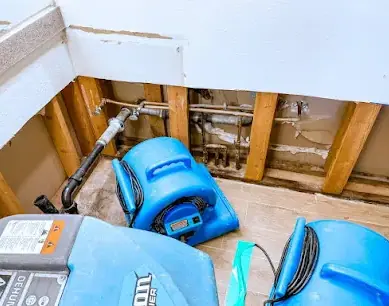
First steps for structural drying in Pleasanton
- 1
Fix the source
Confirm the leak or entry point is stopped first, or drying will never finish.
- 2
Pull out standing water
Extraction comes before drying, so any pooled water should be removed first.
- 3
Clear the floor
Move furniture and rugs off wet floors so moving air can reach the materials.
- 4
Hold the rebuild
Wait on flooring and paint until readings show the structure is dry, then ask for measurements.
How structural drying is handled in Pleasanton
What separates a finished dry-out from a cosmetic one is the order of the work and the readings behind it.
24/7 Pleasanton dispatch
Dispatch runs around the clock, so drying equipment can be set while moisture is still near the surface.
Dried to IICRC S500
The industry drying standard sets the method, and the structure, not just the surface, is read until it matches dry material.
Daily logs for the claim
Temperature, humidity and moisture readings recorded each day show an adjuster why the equipment stayed.
Wet-season conditions
In a climate with rain mostly from November to March, drying plans allow for damp winter air.
What does structural drying cost in Pleasanton, CA?
Structural drying and dehumidification in Pleasanton, CA generally costs $1,000 to $6,500 or more. One area with a light load sits low; dense materials, many rooms and many equipment days sit high.
The drivers are the water category, the square footage that got wet, the material class and how fast drying started. Try the water damage cost calculator for a planning range, then call for a firm number.
One area, light load
$1,000 to $2,500- One LGR unit and fans
- Moisture map
- Daily logs
Several rooms
$2,500 to $4,500- Wall cavities vented
- More equipment on site
- Humidity readings daily
Class 4 materials
$4,500 to $6,500+- Hardwood, plaster or slab
- Desiccant dehumidifiers
- Longer monitoring
How structural drying moves from wet to dry
- 1
Map and classify
Meters and thermal imaging show what is wet, and the class of loss sets how much equipment each room needs.
- 2
Remove the unsalvageable
Materials that cannot dry in place are taken out so air can reach the framing and subfloor.
- 3
Place the equipment
Fans and LGR units, plus desiccants for dense materials, are sized to each room's evaporation load.
- 4
Read daily, then release
Moisture and humidity are logged each day, and equipment leaves once readings sit near the dry sample.
Structural drying follows extraction. It is the stage of a water loss that takes longest and is skipped most. A mop and a few fans can leave a room looking dry while the lower drywall, framing and subfloor still hold water. The drying team's task is to bring wet framing and subfloor back to normal and to prove it with numbers, since a floor that feels dry says little about the cavity beneath. Skipped drying is how swelling, warping and odor show up weeks later.
What gets measured
- Moisture in drywall, wood, subfloor and concrete, using pin and pinless meters
- Air temperature and humidity in every affected room, turned into grains per pound
- A sample reading from untouched material elsewhere in the home
- Thermal pictures that show cool, damp zones behind walls and ceilings
The class of loss, from 1 to 4, sets the equipment. Class 1 is a single small patch of low-porosity material, such as a short run of wall base. Class 4 covers dense stuff such as hardwood, plaster or concrete, which hold moisture stubbornly and can need desiccant units.
Drying the structure step by step
- Anything that cannot be saved is cut out so the rest can release moisture
- Air movers go along the walls and across the floors, matched to each room
- LGR dehumidifiers pull vapor from the air, with desiccants on the densest material
- Baseboards come off and small holes open wall cavities when air cannot reach them
- Logs continue each day until the structure reads within 2 to 4 points of the sample
Pleasanton's Mediterranean climate brings hot dry summers and mild winters. From November to March the damp air gives dehumidifiers more to remove, so drying runs slower and equipment leaves on readings, not on a calendar. The drying time estimator gives a rough planning range.
Floor feels dry but the room smells damp? Have the walls and subfloor measured.
Call (888) 774-9605 about structural drying in PleasantonWhy daily logs matter
Each day's readings show an adjuster that the work met the standard and that every machine earned its day. They also protect the home, because rebuilding should wait until the structure reads dry. Drying follows water extraction, and the two are logged together so the whole job reads as one record.
Covering every corner of Pleasanton, CA
The restoration team covers Pleasanton ZIP codes 94566 and 94588, from Downtown Pleasanton and Vintage Hills to Ruby Hill, Laguna Oaks and Hacienda.
See every area servedStructural Drying and Dehumidification questions in Pleasanton, CA
What does a dried-to-standard result mean?
Wet materials read within a few points of an unaffected sample from the same home, measured with meters under the IICRC S500 method and not judged by touch.
Can household fans do the job?
Fans move air but cannot take moisture out of it. LGR dehumidifiers remove water from the air, so the structure keeps releasing what it holds.
How many days does drying run?
Often three to five for a contained loss. Dense materials, many rooms or damp winter weather stretch that, and the readings decide the end date.
Is it fine to switch the machines off overnight?
Not if speed matters, since a night off restarts the evaporation clock. Drying works only while equipment runs, so it stays on around the clock while a daily visit checks progress against the readings.
Why drill small holes in a wall?
They let dry air reach a closed cavity and let moisture escape. The holes are patched during repairs and keep the framing from staying wet.
What makes an LGR dehumidifier different?
It is a low grain refrigerant unit that pulls water from the air far deeper than a household dehumidifier, which speeds drying of walls, floors and framing.
Wet walls in Pleasanton? Get the structure dried to standard.
Hidden moisture keeps working inside framing and subfloor. The Pleasanton water damage pros dispatch 24/7.