Structural Drying in Livermore, CA
Once the water is out, the building still holds moisture in framing, subfloor and cavities. The drying team sets air movers and dehumidifiers in the Livermore home and keeps them running until meters say dry.
(888) 774-9605Speak with 24/7 Livermore dispatch- IICRC S500 drying
- Daily moisture readings
- Truck-mounted extraction
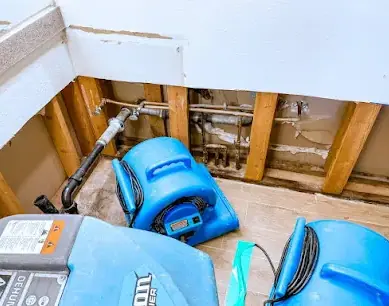
First steps for structural drying in Livermore
- 1
Get the water out first
Extraction removes the liquid, and drying cannot start well until it is gone.
- 2
Keep the house closed
Doors and windows stay shut so the dehumidifiers can pull the air down.
- 3
Leave the equipment alone
Never move or switch off fans and dehumidifiers between visits.
- 4
Expect daily visits
Readings are taken each day, and the gear changes as the materials dry.
How structural drying is handled in Livermore
What separates a finished dry-out from a cosmetic one is the order of the work and the readings behind it.
Dry-out begins at once
Livermore dispatch runs day and night, so equipment can be placed before moisture settles deeper into framing.
The S500 method
IICRC S500 sets how drying equipment is chosen and when it is removed, based on readings rather than appearance.
A log built daily
Temperature, humidity and moisture readings are recorded each visit so the insurer can see the progress.
Homes of different ages
Livermore's median home dates to 1980, so framing, finishes and flooring vary and drying plans are set room by room.
What does structural drying cost in Livermore, CA?
In Livermore, CA, structural drying typically runs $1,000 to $6,500 or more. The cost follows how many rooms are wet, which materials are involved, how many days of readings are needed and how much equipment each room calls for.
The drivers are the water category, the square footage that got wet, the material class and how fast drying started. Try the water damage cost calculator for a planning range, then call for a firm number.
One room or area
$1,000 to $2,500- Air movers and one dehumidifier
- Daily readings
- Wall cavity checks
Several rooms
$2,500 to $4,500- More air movers
- Subfloor and wall base drying
- Extended monitoring
Dense materials or two levels
$4,500 to $6,500+- Desiccant dehumidifiers
- Hardwood or cabinet drying
- Longer run time
How structural drying moves from wet to dry
- 1
Classify the loss
The class of the loss and the water category are set first, since they decide how much equipment each room needs.
- 2
Place the equipment
Air movers are aimed along walls and floors, and LGR dehumidifiers go where the humid air collects.
- 3
Take daily readings
Each visit, the drying team records moisture content, temperature and humidity and moves gear as the materials dry.
- 4
Confirm the goal
Equipment leaves only when wet materials read within 2 to 4 points of a dry reference elsewhere in the home.
Drying is the long part of any water loss. Extraction removes liquid, but wood, drywall and concrete hold moisture that only leaves slowly, as vapor, and it does so only if the air around it is dry enough to take it. Structural drying is how that moisture is moved out of the building.
What the drying team measures
- Moisture content in drywall, framing and subfloor
- Air temperature and relative humidity in each room
- Grain depression, a way of expressing how much water the air holds
- A dry reference reading from an unaffected part of the home
Because every reading is a number, the plan can change when the numbers change: a room that dries quickly gets less equipment, and one that lags gets more. Livermore has a hot-summer Mediterranean climate, with hot dry summers and cool winters, and frost is common from November through March. Those seasons change how much help the outside air gives, so a closed house with dehumidifiers is the usual approach. No fixed number of days applies to every home.
How a structure is dried
The work follows a standard sequence:
- Extraction of standing water before any drying gear is placed
- Class and category set for each wet room
- Air movers placed to sweep walls and floors
- LGR dehumidifiers sized to the volume of moisture
- Daily readings with the equipment adjusted or removed as materials dry
Air movers speed evaporation and dehumidifiers remove the vapor so it does not settle on cooler surfaces. Dense materials such as hardwood or concrete may need desiccant units. For planning, the drying time estimator gives a general sense of the timeline, and the first phase of any loss is water extraction in Livermore.
Home still damp after the water is gone? Call so the structure is dried to a measured goal.
Call (888) 774-9605 about structural drying in LivermoreWhy drying logs matter
The daily log is the proof that the structure was dried rather than just patched. It lists the readings, the equipment and the dates, and it shows an insurer that the work ended on numbers, not on a guess or a calendar. The record also protects the next step: flooring and drywall go back over dry framing, not over trapped moisture that can lead to mold.
Covering every corner of Livermore, CA
The restoration team covers Livermore ZIP codes 94550 and 94551, from Downtown Livermore and Sunset East to Springtown, Kristopher Ranch and Windmill Springs.
See every area servedStructural Drying and Dehumidification questions in Livermore, CA
Why does drying take so long after the water is gone?
Materials release moisture slowly. Water sits inside drywall, framing and subfloor, and it leaves only as fast as the dehumidifiers and air movement can carry it away.
What is a dry reference reading?
A measurement taken from an unaffected part of the home. Wet materials are compared with it, and drying is done when they sit within 2 to 4 points of it.
Can I turn the equipment off at night?
No. Stopping the dehumidifiers lets humidity climb and can slow the whole job. The equipment is placed so it can run safely around the clock.
Will drying raise my power bill?
Yes, for a while. The equipment runs on electricity, and the added use is a real cost of the loss, so keep the bills with the claim file in case the insurer asks.
How do I know drying is finished?
Meters tell. Readings on drywall, framing and subfloor are compared with the dry reference, and equipment is removed only when they match.
Is structural drying covered by insurance?
Drying after a sudden covered loss is usually part of the claim once the deductible is met. Coverage depends on the policy, so confirm the terms with the insurer.
Wet structure in your Livermore home? Dry it right.
Moisture left in framing and subfloor keeps causing damage. The Livermore water damage pros dispatch 24/7.