Water Extraction in Livermore, CA
Winter storms and failed hoses leave water standing on Livermore floors. The extraction crew removes it with truck-mounted equipment, and the drying team then dries every material the water touched.
(888) 774-9605Speak with 24/7 Livermore dispatch- IICRC S500 drying
- Daily moisture readings
- Truck-mounted extraction
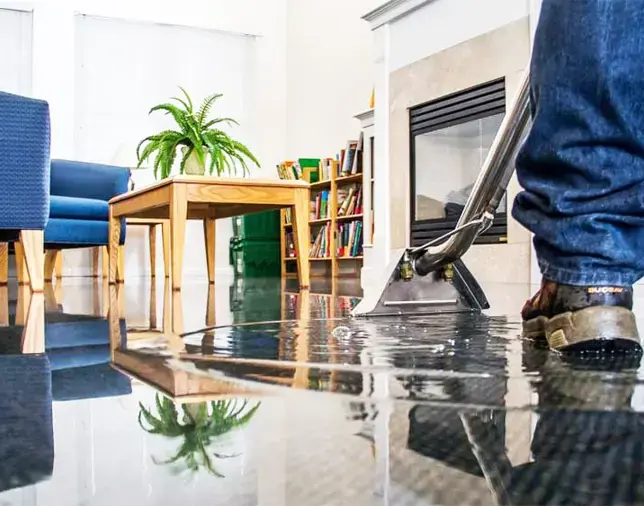
First steps for water extraction in Livermore
- 1
Find the source
Stop the flow at the fixture valve or the main.
- 2
Check the power
Leave breakers for wet rooms alone unless the panel is dry and the floor under you is too.
- 3
Photograph first
Take pictures of the water and the damaged items before anything gets moved.
- 4
Call for extraction
Say which rooms are wet, how deep the water stands and where it came from.
How water extraction is handled in Livermore
What separates a finished dry-out from a cosmetic one is the order of the work and the readings behind it.
Livermore dispatch, day and night
Dispatch covers Livermore at every hour, so extraction can begin while water is still spreading across a floor.
Drying measured, not guessed
IICRC S500 sets the drying standard, and equipment stays until readings, not appearances, say the structure is dry.
A paper trail for the claim
The opening moisture map, daily logs and dated photos from before demolition are kept together for the adjuster.
Storm water know-how
The January 2023 atmospheric rivers showed how fast storm water reaches Livermore floors, so extraction comes before everything else.
What does water extraction cost in Livermore, CA?
In Livermore, CA, water extraction and removal typically runs $700 to $4,500 or more. The depth of standing water, the water category and how far it traveled into carpet, pad and subfloor move the figure.
The drivers are the water category, the square footage that got wet, the material class and how fast drying started. Try the water damage cost calculator for a planning range, then call for a firm number.
One wet room
$700 to $1,600- Puddled water vacuumed out
- Soaked carpet and pad pressed dry
- Opening moisture map
Two floors or many rooms
$1,600 to $3,200- Water that reached a lower level
- Pad and trim pulled
- Drying gear on both floors
Floodwater or sewage
$3,200 to $4,500+- Contaminated water handled as Category 3
- Porous finishes hauled out
- Antimicrobial treatment
How water extraction moves from wet to dry
- 1
Map before moving
Thermal imaging and pinless meters show where the water traveled, including the room below, before any gear goes down.
- 2
Pull the water out
The extraction crew runs truck-mounted extraction across the floor, then weighted tools press water out of carpet and pad.
- 3
Remove what cannot dry
Pad, baseboard and flooring that will not recover are cut out, and each piece is photographed first.
- 4
Hand off to drying
Air movers and LGR dehumidifiers go in next, and the drying team logs readings every day until the goal is met.
In Livermore, water extraction usually follows one of two events: a household failure, or a winter storm like the one in January 2023. Either way, the clock starts when water meets drywall and flooring. The extraction crew removes it early so the building does not keep it.
Where Livermore floors take on water
Livermore is mostly single-family housing, with attached homes and apartment buildings mixed in, and the way a building is laid out decides where the water ends up:
- Single-story homes, common in Sunset East, let water fan out across one floor plan
- Attached townhomes send water down through the ceiling of the unit below
- Carpet pad holds water against the subfloor long after the surface feels dry
- Drywall draws moisture upward, so a damp baseboard can signal a soaked cavity behind it
The extraction sequence in a Livermore home
Every job follows one order so nothing is skipped:
- Confirm the source is stopped and the wet rooms are safe to enter
- Map moisture with meters and a thermal camera, rooms below included
- Extract the standing water, then press more out of carpet and pad
- Cut out and photograph materials that cannot recover
- Set air movers and dehumidifiers for the drying phase
A broken supply hose puts out Category 1 water, which often dries in place if extraction begins early. Washer or dishwasher discharge is Category 2. Water from a sewer or a flooded arroyo is Category 3 and follows sewage backup cleanup in Livermore. The long part of the job is structural drying.
Water standing on a Livermore floor? Stop the source, then get the extraction crew moving.
Call (888) 774-9605 about water extraction in LivermoreWhy a wet-vac falls short
A household vacuum lifts the puddle and leaves the pad, subfloor and wall base soaked. Truck-mounted units pull far more water out of the materials themselves, which shortens drying and limits what must be demolished.
Speed matters most in the first hours, because that is when water is still in the carpet and pad instead of inside the wall. Photographs taken before anything moves, and a clear note of where the water came from, give the insurance adjuster a straight account of what happened.
Covering every corner of Livermore, CA
The restoration team covers Livermore ZIP codes 94550 and 94551, from Downtown Livermore and Sunset East to Springtown, Kristopher Ranch and Windmill Springs.
See every area servedWater Extraction and Removal questions in Livermore, CA
How soon should standing water come out?
As soon as it can. Water begins wicking into drywall and under flooring almost at once, and growth can start within 24 to 48 hours. Dispatch runs around the clock, and standing water is treated as urgent.
Does a storm in Livermore need a different approach?
Water arriving from outside during a storm counts as Category 3, which means anything porous that it soaked has to be discarded. The crew extracts first, photographs the water marks on the walls, then sets drying gear.
Will the carpet survive extraction?
Often, when the water was clean and extraction began early. The pad underneath usually goes, because it keeps water pressed against the subfloor. Carpet that sat in Category 3 water is discarded.
Is extraction the same as drying?
No. Extraction takes out liquid water only. Moisture still sitting in drywall, framing and subfloor leaves through air movers and dehumidifiers, and daily readings decide when that phase ends.
What if the leak started in a neighbor's unit?
Both homes are mapped and extracted, and the origin of the leak is noted, so each owner's insurer reads the same account of the spread.
Does insurance cover extraction in California?
Many policies pay for extraction when a leak is sudden and accidental, after the deductible. What is actually paid depends on the policy, so ask the insurer.
Water on a Livermore floor? Get it pulled out now.
Water that stands soaks into drywall and cabinets by the hour. The Livermore water damage pros dispatch 24/7.