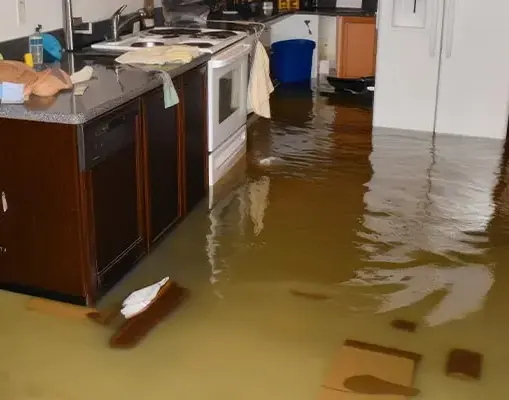
Union City sits where Dry Creek and the Alameda Creek flood channel meet low ground and busy streets. Dry Creek has flooded at Mission Boulevard, damaging nearby properties and the Decoto neighborhood.
Key takeaways
- Dry Creek is a tributary of Alameda Creek, which reaches the Bay through Niles Canyon and a flood control channel.
- Union City warns that storm drains have limited capacity and that low lying areas may flood, during a rainy season that runs November to April.
- Sandbags are offered at the Public Works Corporation Yard on 7th Street, with a limit of five bags per household or business.
- Flood water is contaminated, so people, pets and bare hands stay out of it until the crew arrives with protective gear.
- The restoration team extracts the water, removes wet materials and dries the structure to a measured goal.
Where Dry Creek fits in Union City
Alameda Creek reaches the Bay through Niles Canyon and a flood control channel, and Dry Creek is one of its tributaries.
Dry Creek has flooded at Mission Boulevard, which is State Route 238 through Union City. That flooding has damaged adjacent properties and the nearby Decoto neighborhood.
Decoto was founded in 1870 as a railroad hub on the east side of the city, and it is one of the city's older neighborhoods.
A homeowner near the creek or on Mission Boulevard should treat the rainy season as the time to prepare, not the time to start looking for help.
- Neighborhoods named by the city include Decoto, Old Alvarado, the Station District and the Union Landing area.
- In February 1998, during El Nino storms, Dry Creek damaged the El Arroyo Mobile Home Park.
- No exact date is given here for the Mission Boulevard flooding, because it is not confirmed.
The rainy season and storm drains
Union City's rainy season, like the rest of California's, usually runs from November to April.
The city itself warns that its storm drains have limited capacity and that low lying areas may flood. A property near the creek or on low ground has less margin than one on a rise.
Wet soil from earlier storms makes every new rain more likely to run off instead of soaking in.
- Water can overflow a creek bank and reach a yard or garage.
- A full storm drain can push water back up a street or driveway.
- Long rain on top of wet soil leaves less room for runoff to drain.
What flood water does inside a home
A flood does not need to be deep to cause damage. A few inches across a floor can soak carpet, baseboards and the bottom of walls.
Many Union City homes date from the 1970s and 1980s, so a typical house has a floor, a drywall base and insulation that all absorb water.
What gets wet first
Water finds the lowest and softest materials first.
- Carpet and pad in ground floor rooms.
- Baseboards, drywall and insulation at the base of walls.
- Garage contents, stored paper and cardboard.
- Cabinet bases in kitchens and bathrooms.
Why it is more than water
Creek and street water carries soil and bacteria, and a flooded home is treated as contaminated until it is cleaned.
Safety and the first hour
Safety comes first. Flood water and wet electrics are a dangerous mix.
- Turn off power to flooded rooms only if the panel is dry and can be reached safely.
- Keep children and pets out of the water.
- Do not use a household vacuum on wet floors.
- Move papers, electronics and small valuables to higher shelves.
- Photograph the water line and the damaged items before moving them.

Sandbags and preparation
Union City provides pre filled sandbags at the Public Works Corporation Yard on 7th Street, with a limit of five bags per household or business.
Sandbags help divert shallow water, but they do not stop a flood. They are worth placing early, before the creek rises.
- Place bags at garage doors and low entries, not against walls.
- Move vehicles and stored items off low garage floors.
- Keep a flashlight, a phone charger and a list of the main water shutoff location handy.
How extraction and cleanup work
Water leaves the structure first. A storm flood cleanup job uses pumps and extractors to pull standing water, then removes materials that cannot be saved.
Porous materials that touched flood water, such as carpet pad and wet drywall, are usually removed. Hard surfaces are cleaned and treated.
- Extraction: pumps and extractors remove standing water from floors and garages.
- Removal: wet pad, insulation and drywall that touched dirty water are cut out.
- Cleaning: hard surfaces are cleaned and treated.
- Documentation: photos and readings are kept for the insurer.
Drying homes and mobile homes
After cleanup, drying brings framing and subfloor back to a safe level. A structural drying job sets air movers and dehumidifiers and checks them daily with meters.
Union City also has 1,237 mobile homes, about 6.0% of its housing units, and drying approaches differ between a mobile home and a detached house.
- Readings are taken in walls and floors each visit.
- Equipment is adjusted when a reading stalls.
- The job ends when materials reach their dry goal under the IICRC S500 standard.
Flood insurance and records
Flood damage is often handled separately from a standard homeowner's policy, so the first call should be to the insurer.
For the wider picture of how the restoration team covers the city, see the Union City page and the Dublin storm flood page.
- Keep photos, receipts and a room by room list.
- Ask what documentation is needed before throwing anything away.
- Log each call with names and dates.
A short checklist for the days after
Once the water is out, the work shifts from emergency to recovery. A few habits keep the repair on track.
They also protect the claim if it is questioned later.
- Leave drying equipment running until the readings are confirmed.
- Check the garage, the shed and any crawl areas for wet stored items.
- Watch for a musty smell, which can mean a wet cavity was missed.
- Keep every receipt for supplies, hotel stays and repairs.