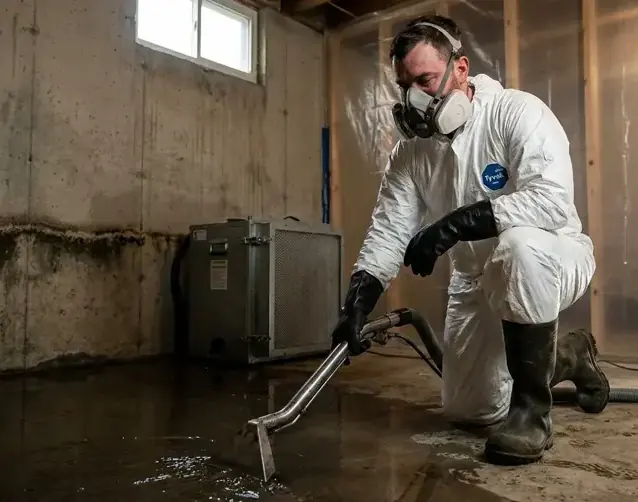
A sewer backup is the worst kind of water damage, because the water is contaminated. In San Ramon, the question that comes up right away is who owns the pipe that backed up.
Key takeaways
- Central San says each property owner is responsible for the entire sewer lateral from the house to where it connects to the Central San main.
- Dublin San Ramon Services District says the property owner is responsible for the service pipe between the house and the sewer main.
- Which district serves a street depends on where the home sits in San Ramon, so a homeowner should confirm the district for the address.
- A sewage backup is Category 3 water. Keep people and pets out, and do not clean it with household tools.
- The restoration team contains the backup, removes the affected materials, treats surfaces and dries the area.
Two sewer districts in one city
San Ramon is served by more than one sewer agency. Central Contra Costa Sanitary District, known as Central San, serves portions of the city, and Dublin San Ramon Services District serves a separate section of south San Ramon.
Water works the same way. East Bay Municipal Utility District serves most of San Ramon, and Dublin San Ramon Services District serves Dougherty Valley.
No one rule about district boundaries should be assumed for a given street. The district for an address should be confirmed with the district itself.
A homeowner who keeps the district's name and the account details in a drawer saves time during an emergency, when every minute with sewage on the floor counts.
Who owns the lateral
The lateral is the pipe that carries wastewater from the house to the main in the street. Both districts put its upkeep on the owner.
- Central San: each property owner is responsible for the entire sewer lateral from the house to where it connects to the main.
- Dublin San Ramon Services District: the property owner is responsible for the service pipe between the house and the sewer main.
- A blockage in the main in the street is a district matter, which is why the district should be told about every backup.
Signs a backup is starting
Drains give warning before they back up. Slow action in several fixtures at once points to a shared problem, not a single clog.
- Several drains slow down at the same time.
- Gurgling in a toilet or shower when another fixture runs.
- Sewage smell in a bathroom or the garage.
- Water or sewage coming up a floor drain or low shower.
Why laterals fail
Laterals run underground, out of sight, so problems often grow for years before they show up inside the house.
Knowing the usual causes helps a homeowner decide when to have the pipe inspected.
- Tree roots find joints and grow into the pipe.
- Grease and wipes collect and form a blockage in a bend or joint.
- Older pipe can crack, shift or separate at joints.
- Soil movement can bend a pipe out of line, and San Ramon's General Plan notes soils with clays that have high shrink swell potential.
What to do right away
Sewage is dangerous, so protect people first and the house second.
In the first minutes
Stop using water in the house. Every flush, shower and load of laundry sends more water into a blocked drain.
- Keep children and pets out of the affected rooms.
- Do not wade through the water in bare feet or touch it with bare hands.
- Shut off power to a room if sewage is near outlets or appliances.
Calls to make
A homeowner has three calls to make, and the order matters.
- The sewer district for the address, to report the backup and rule out the main.
- A plumber, to clear and inspect the lateral.
- The insurer, to ask what documentation it needs.
What a Category 3 backup means for cleanup
Sewage is Category 3 water, the most contaminated class. It can carry bacteria and viruses, and it is not treated like clean supply water.
A sewage backup cleanup job is set up around containment and protection of the crew and the home.
- Contain: the affected rooms are sealed off so contamination does not spread.
- Remove: porous materials that touched sewage, such as carpet, pad and wet drywall, are taken out.
- Clean and treat: hard surfaces are cleaned and treated with an EPA registered antimicrobial.
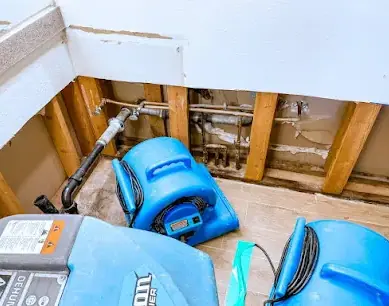
- Dry: equipment dries framing and subfloor to the IICRC S500 dry goal.
Extraction and drying after the backup
Standing sewage water is pulled out first. A water extraction crew uses pumps and extractors, then the drying team follows.
Flooring and wall bottoms are checked with moisture meters, because contaminated water travels into cavities.
- Wet baseboards and drywall below the water line are removed.
- Sealed concrete and solid framing are cleaned and dried in place when possible.
- Readings are taken until the materials reach their dry goal.
Keeping a record for the claim
A sewer backup is often covered differently from other water losses, so the paperwork matters.
Photos and dates are the simplest evidence, and the Dublin sewage cleanup page explains the same process for the neighboring city.
The drying team documents the readings each day, so the claim file shows what was wet, what was removed and when the area reached its dry goal.
- Photograph the source, the water and every affected room.
- Keep the plumber's report on what blocked the lateral.
- Ask the insurer in writing what sewer backup coverage the policy has.
Lowering the odds of a second backup
After a backup, the next question is how to avoid another. A camera inspection by a plumber can show the lateral's condition.
Habits at home also matter.
- Keep grease, wipes and paper towels out of the drain, and flush only toilet paper.
- Ask a plumber for a camera inspection of the lateral after any backup.
- Keep trees and large shrubs in mind when deciding where roots may reach.
- Know where the cleanout is and keep it accessible.