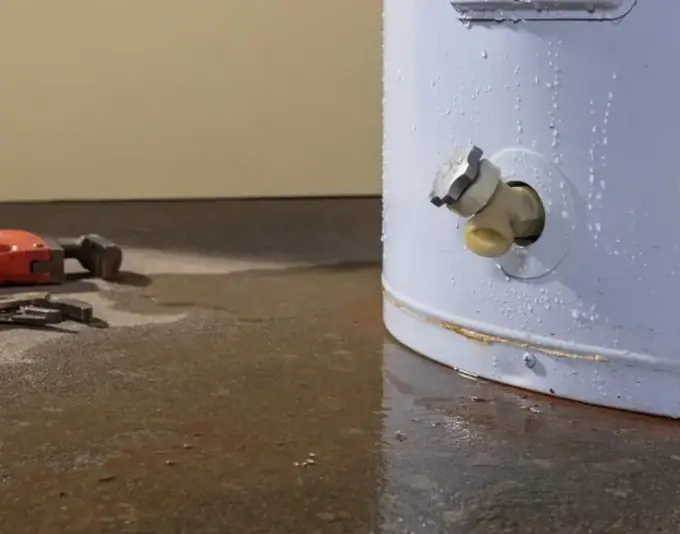
A tank water heater holds a lot of water, and when it fails the water goes everywhere at once. In Livermore, the tank often sits in a garage or a closet beside finished rooms.
Key takeaways
- Zone 7 Water Agency says hard water can build sediment in water heater tanks, which then need regular flushing.
- A failing tank can leak slowly for weeks or release its contents in minutes, so rust, drips and rumbling are worth acting on.
- Shut off the cold water supply to the tank and the power or gas, then stop the water spreading.
- A garage tank spreads water across the floor, while a closet tank sends it into wall framing and flooring.
- The restoration team extracts the water, checks wall bottoms with meters and dries the framing and subfloor.
Why sediment and scale matter
Zone 7 Water Agency, the Tri-Valley water wholesaler, delivers treated water to the City of Livermore, the City of Pleasanton, Dublin San Ramon Services District and California Water Service.
Zone 7 also says hard water can scale steel pipes in older homes and build sediment in water heater tanks, which then need regular flushing.
Sediment sits at the bottom of the tank, and it can trap heat against the steel. Over years that stress can help open a seam or a fitting.
- A tank that rumbles or pops while heating often has a layer of sediment at the bottom.
- Hot water that runs out sooner than it used to can point to the same buildup.
- A tank that is never flushed gives the sediment more time to settle.
Signs a tank is close to failing
Most tank failures show a warning first. Catching it can turn a flood into a plumbing job.
- Rust colored water from the hot tap, or rust stains on the tank or its fittings.
- Damp spots, a wet floor or a dripping relief valve near the tank.
- Popping, rumbling or hissing noises while the tank heats.
- A tank that is old enough that its original lining may have worn out.
- Corrosion at the supply connections on top of the tank.
Garage tank or closet tank: where the water goes
Where the tank stands decides how the water spreads. Livermore has homes from every decade, but most were built from the 1960s to the 1990s, with a median build year of 1980, so garages and utility closets are both common.
A tank in the garage
Water runs across the garage floor and can reach the door to the house, stored boxes and the wall base.
Cardboard, paper and fabric soak up water quickly, so stored items go first.
A tank in a closet or utility room
A closet has less floor area, so water reaches the walls and the flooring of the next room quickly.
Drywall and baseboards wick water upward, and the water can follow framing into adjoining rooms.
What to do in the first minutes
Stopping the source limits the damage. A homeowner can usually do the first steps without tools.
- Close the cold water supply valve on the pipe at the top of the tank.
- Switch off the power at the breaker for an electric heater, or set a gas heater to off.
- Keep out of standing water near any outlet or appliance.
- Move stored items and rugs out of the wet area.
- Take photos of the tank, the floor and any wet walls before cleanup.

What gets wet around a water heater
The tank is rarely alone. Garages and closets hold things that soak up water fast.
A quick inventory shows what is at risk and what can be saved.
- Cardboard boxes, paper files and fabric on the floor soak up water in minutes.
- Drywall behind the tank wicks water upward from the baseboard.
- Flooring in rooms next to the closet can swell at the edges.
- Insulation around pipes and walls holds water and dries slowly.
- Electrical outlets and appliances near the floor are a shock risk until power is off.
How the cleanup works
A water heater failure starts with water on the floor, so Livermore's water extraction work comes first. The crew pulls standing water with pumps and extractors before it wicks any further.
A water heater failure cleanup then follows the water into the walls and flooring.
- Moisture meters check drywall, baseboards and flooring around the tank.
- Wet baseboards are removed so the wall cavity can dry.
- Air movers and dehumidifiers dry framing, subfloor and flooring.
- Readings are repeated until the materials reach their dry goal under the IICRC S500 standard.
After the cleanup: the tank itself
A leaking tank is replaced by a plumber, because a split tank cannot be patched. The restoration team does not install the heater.
No local permit rule is confirmed here, so a homeowner should ask the plumber what applies at the address.
- Ask the plumber whether a drain pan and a drain are in place.
- Ask about flushing the new tank on a regular schedule.
- Keep the old tank's details and the replacement invoice with the claim file.
Water providers in Livermore
Two retail water providers serve Livermore: Livermore Municipal Water and California Water Service, also called Cal Water. Both buy treated water from Zone 7.
A homeowner who sees a sudden pressure change or a problem outside the house, before the meter, can call the provider. Inside the house, the pipes and the tank belong to the owner.
For more on how the restoration team covers the city, see the Livermore page and the Dublin water heater page.
Reducing the risk of a second leak
A new tank starts clean, and a few habits keep it that way. These habits matter more in homes where hard water leaves scale behind.
They also make the next leak easier to see.
- Flush the tank on a regular schedule, as Zone 7 recommends for sediment.
- Look at the base of the tank and the connections every few months for drips or rust.
- Know where the cold water shutoff is, and test that it turns.
- Keep stored boxes off the floor around the tank.