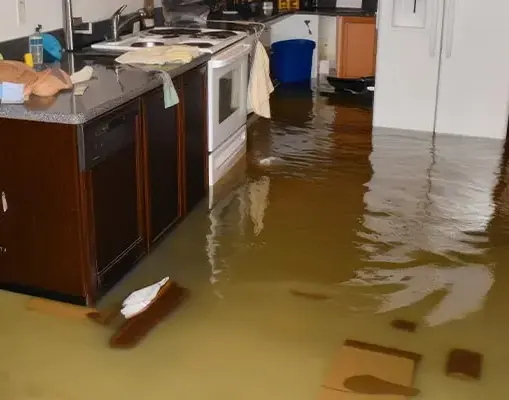
On December 31, 2022, Pleasanton's creeks, arroyos and storm drains were overwhelmed. Roads closed, and by the next morning the city had run out of sandbags.
Key takeaways
- Less than 5% of Pleasanton lies in a FEMA Special Flood Hazard Area, but the December 31, 2022 storm showed that water can still reach homes outside it.
- Five channels cross the city: Arroyo de la Laguna and the Alamo Canal, Arroyo del Valle, Arroyo Mocho, Chabot Canal and Tassajara Creek.
- Storm water is dirty water. Keep family, pets and bare skin out of it, and shut off power to wet rooms.
- The restoration team extracts the water first, then removes wet materials and dries the structure to a measured goal.
- Photos and a dated list of damaged items help later with the insurer.
What the December 31, 2022 storm showed
Pleasanton has a Mediterranean climate with hot dry summers and about 14.5 inches of rain a year, mostly November to March. That means the wet season arrives in bursts.
During the December 31, 2022 storm, creeks, arroyos and storm drains were overwhelmed. Foothill Road was closed from Bernal Avenue to Kilkare Road, Kilkare Road was closed and the St. John Circle crossing was underwater.
The Arroyo del Valle ran high at the Main Street Bridge on January 13, 2023, and Zone 7 Water Agency's board declared a flood emergency on February 1, 2023 over the storm damage.
- The city's sandbag supply was used up by January 1, 2023.
- Lake Del Valle releases feed the Arroyo del Valle, so creek levels can rise even after rain eases.
- The Christmas Eve 1955 flood hit northern Pleasanton, near where Hacienda Business Park stands today.
Where flood water can come from
Five major channels cross Pleasanton, so a homeowner should think about more than one creek.
Water can enter by overflow from a channel, by an overwhelmed storm drain pushing water up a street, or by runoff finding a low garage door.
- Arroyo de la Laguna and the Alamo Canal
- Arroyo del Valle
- Arroyo Mocho
- Chabot Canal
- Tassajara Creek
The first hour: safety before cleanup
Flood water carries soil, bacteria and sometimes sewage. It is treated as contaminated until proven otherwise.
Safety comes ahead of any cleanup.
- Turn off electricity to flooded rooms at the panel, but only if the panel is dry and reachable without standing in water.
- Keep children and pets out of the water, and wear boots and gloves if entering.
- Do not use a household vacuum on wet floors.
- Move valuables, papers and electronics to higher ground.
- Take photos of the water line and damaged items before anything is moved.
Water extraction comes first
The faster standing water leaves, the less of the structure it can soak. Pleasanton's water extraction work uses pumps and truck mounted equipment to remove water from floors, garages and carpet.
After the water is out, the crew checks how far moisture reached into the drywall, insulation and flooring.
- Pumps and extractors remove standing water.
- Wet carpet pad and soaked insulation are removed because they hold water.
- Moisture meters show what is still wet in walls and framing.

What happens to carpet, drywall and furniture
Not everything wet has to be thrown out. The crew sorts materials by how much water they took and how clean that water was.
Because flood water carries soil and bacteria, porous materials that touched it are held to a stricter standard.
Usually removed
Porous materials hold contaminated water and are hard to clean completely.
- Carpet pad and soaked insulation.
- Drywall that was under water or wicked water above the line.
- Particle board cabinets and soft baseboards that swelled.
Often dried and kept
Hard, sealed materials can usually be cleaned, treated and dried in place.
- Concrete floors and garage slabs.
- Solid wood framing.
- Tile and sealed hard flooring, after the subfloor reads dry.
Drying and storm flood cleanup
Storm flood cleanup goes beyond pulling out water. Floors, wall bases and anything touched by dirty water are cleaned and treated so the home can be dried and repaired safely.
A storm flood cleanup job ends when the readings show the structure has reached its dry goal, following the IICRC S500 standard.
- Contaminated drywall and baseboards are cut out and removed.
- Surfaces are cleaned and treated.
- Air movers and dehumidifiers dry framing and subfloor.
- Daily readings confirm the dry goal before equipment is removed.
Insurance, flood zones and paperwork
Pleasanton is a CRS Class 7 community in the National Flood Insurance Program, with a 15% premium discount. Flood insurance is a separate policy from a standard homeowner's policy, so a homeowner should check what the home actually has.
A flood zone map does not promise a dry house. The December 31, 2022 storm overwhelmed storm drains and channels in a city where less than 5% sits in a FEMA Special Flood Hazard Area.
- Keep dated photos, receipts and a room by room list of damaged items.
- Ask the insurer what documentation it wants before throwing away damaged materials.
- Keep a written log of every call, with names and dates.
Preparing for the next storm
Sandbags are available at the City of Pleasanton's Operations Services on Busch Road, but the supply ran out in January 2023, so waiting for the last minute is risky.
The city's own Pleasanton page lists the services the restoration team covers across the area, from extraction to drying.
A short checklist for the second day
Once the water is out and drying equipment is running, a homeowner still has a few jobs.
These keep the claim, the family and the repair on track.
- Leave the drying equipment running until the team confirms the readings.
- Keep a list of every item thrown away, with photos taken first.
- Ask the insurer in writing which repairs it wants documented.
- Check the garage and any shed for stored paper, paint and chemicals that got wet.
- Watch for a musty smell, which can mean a wet cavity was missed.