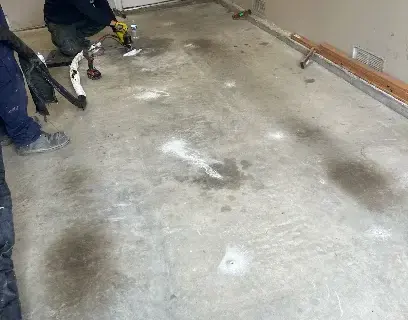
A slab leak is a pipe failure under the concrete floor, so the first sign is often a symptom on top of the floor, not a puddle. In Dublin, California, the signs are worth knowing because many homes sit on a slab, on the valley's expansive clay soil.
Key takeaways
- A slab leak hides under the floor, so watch for a warm patch, damp flooring, a musty smell or a water meter that moves with every tap closed.
- West Dublin has many 1960s and 1970s single family homes with copper or older galvanized supply pipe, while East Dublin is newer and built from the late 1990s on.
- Shut the main supply valve if water is clearly reaching the floor, then call a plumber to find and repair the pipe.
- The restoration team dries the flooring and subfloor from the top down once the pipe is repaired, and records moisture readings until the materials reach their dry goal.
- A slab leak is a slow loss at first, so an early check is cheaper than a long wait.
What a slab leak is and why Dublin homes see them
A slab leak is a supply pipe that fails under or inside the concrete slab a house is built on. The water has nowhere to go but up through cracks and joints, or sideways under the flooring.
Dublin sits on the valley's expansive clay soil. Clay swells when it is wet and shrinks when it dries, and that movement can push on a slab and the pipes beneath it.
This post covers the signs, the first steps and how the cleanup works. It does not replace a plumber's diagnosis.
- Slab on grade homes put the supply pipe close to the floor, so a leak reaches flooring quickly.
- Older pipe, such as galvanized steel, can corrode from the inside and pinhole over time.
- Soil movement and pipe age together are a common reason a slow leak becomes a flood.
Warning signs to look for
A slab leak rarely announces itself. The signs are small and easy to blame on something else.
A homeowner who notices two or more of them together has a good reason to check.
Signs on and in the floor
Flooring can warm up, buckle, cup or stain. A damp patch under carpet may smell like wet cardboard.
- Warm spots: a hot water pipe leaking under the slab can warm a patch of tile or laminate.
- Lifting or gaps: laminate and wood floors swell at the seams when moisture comes from below.
- Wet carpet with no source: the pad stays damp even though nothing has spilled.
- Cracks in grout lines or baseboards that follow a straight path across a room.
Signs in the water system
The meter and the sound of the pipes can tell the story before the floor does.
- Meter movement: with every faucet and appliance off, a spinning meter dial means water is escaping somewhere.
- Running water sound: a faint hiss or trickle under the floor in a quiet house.
- A water bill that climbs with no change in use.
- Low pressure at a tap that was fine last month.
West Dublin and East Dublin are different
West Dublin is mostly 1960s and 1970s single family homes. Many have copper or older galvanized supply pipe, and pipe that old can wear thin.
East Dublin is newer. Dublin Ranch, Positano, Fallon Village, Jordan Ranch and Wallis Ranch were built from the late 1990s on, with many townhomes, condos and stacked flats.
In a stacked building, a slab leak is a ground floor problem, while a leak on an upper floor is a different failure. The cleanup follows where the water actually went.
- Older detached homes: the leak is often tied to pipe age and soil movement.
- Newer townhomes: a shared wall can carry moisture into a neighboring unit, so tell the neighbor early.
- Either way, the water meter and a plumber's leak locating tools find the spot before anyone breaks concrete.
What to do in the first hour
Act on the water first, then on the paperwork. The order matters because every dry hour counts.
Dublin San Ramon Services District provides water and sewer service in Dublin, so the meter belongs to the district and the pipe after it belongs to the homeowner.
- Shut the main supply valve at the house if water is visibly reaching the floor.
- Turn off the water heater supply so the tank is not heating without a refill.
- Move rugs, shoes and furniture legs off wet flooring and lift small items onto blocks.
- Take dated photos of the wet floor, the meter reading and any stains.
- Call a plumber to find and repair the leaking pipe before drying starts.
How the drying works after the pipe is fixed
Drying cannot beat a live leak, so the repair always comes first. Once the pipe is sound, the restoration team moves in with extraction and drying equipment.
A water extraction pass removes any standing water on the floor, and a slab leak water damage job then dries the flooring and the layers under it.
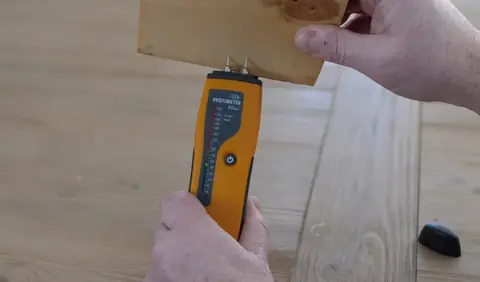
- Moisture mapping: meters show which flooring, baseboards and drywall are wet and which are dry.
- Floor drying: air movers and low grain dehumidifiers pull moisture out of flooring and the subfloor.
- Wall checks: drywall at the base of the wall is probed, and wet sections are cut out when they will not dry.
- Daily readings: the team records readings until materials reach the dry goal, following the IICRC S500 standard.
Why drying beats waiting it out
Damp flooring left in place can warp, loosen its glue and smell. Mold can also start to grow when a floor stays wet.
A proper structural drying job protects the flooring that can be saved and shows clearly which materials must be replaced.
- Hardwood and laminate often cup if drying is delayed, and engineered floors can delaminate.
- Carpet pad is usually replaced, while carpet can sometimes be dried in place.
- Baseboards and the lower few inches of drywall are the first to wick water upward.
Checking the risk before a leak starts
A homeowner who wants to know where the home stands can try the slab leak risk check. It asks about the home's age, the pipe and the signs already noticed.
For anyone who finds water inside the house, the water extraction page explains how standing water is removed before drying begins.